Why airport lights have different colors
Blue, green, white and red: reading an airport at night through its lights.
View gallery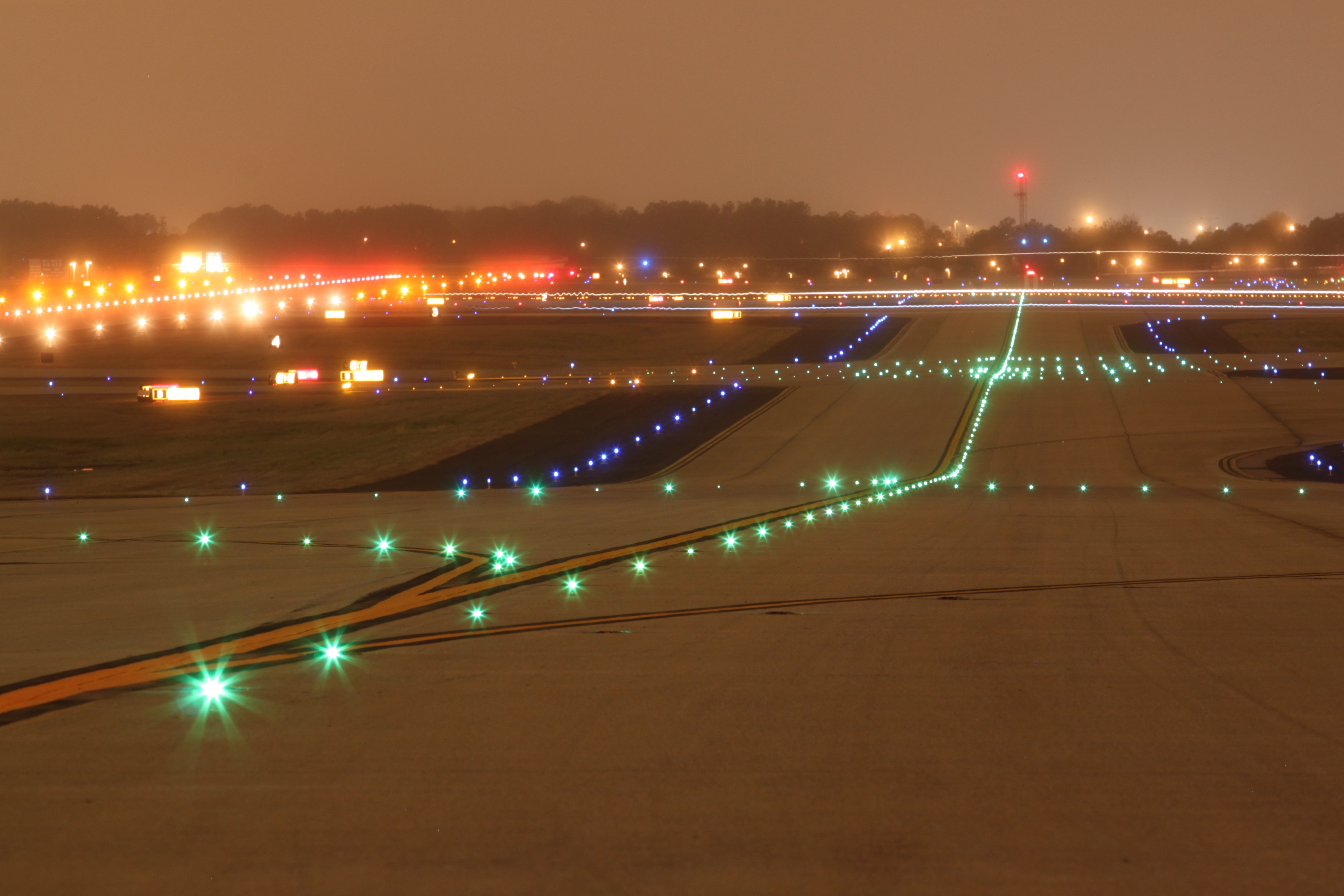
Edges and direction
At night, long lines of lights make an airport easy to recognize. Their colors and positions help distinguish runways, taxiways and the boundaries of different areas.
Blue lights mark the edges of taxiways, the routes aircraft use between parking stands and runways. Green lights set into the pavement can mark a taxiway centerline. One color defines the edge; the other helps trace the route.
The runway has its own system
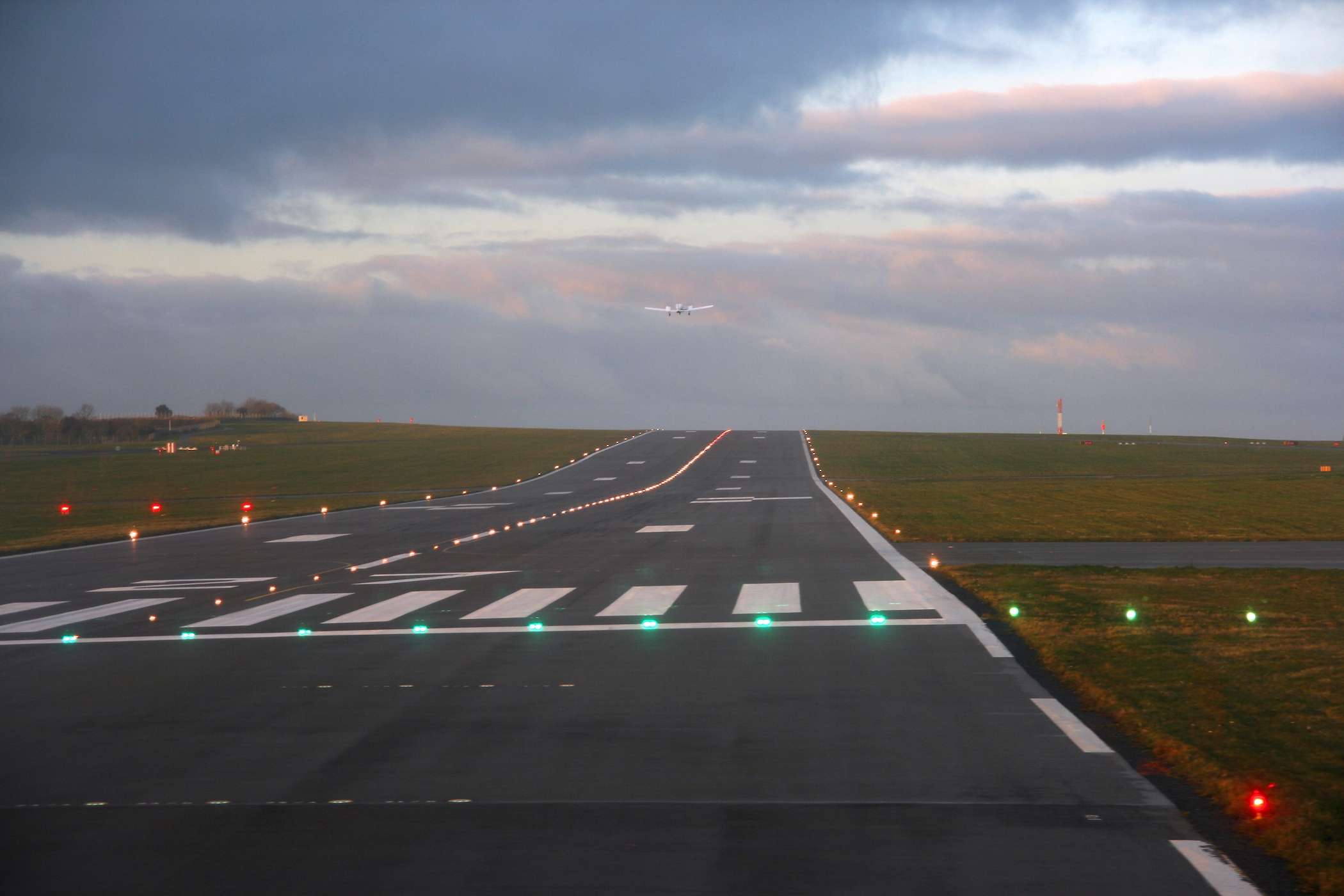
Runway edge lights are mostly white. On runways equipped for instrument approaches, a yellow section near the far end provides a warning. Threshold lights appear green to an approaching aircraft, while runway end lights appear red to an aircraft traveling along the runway. What a light means therefore depends on both its color and the direction from which it is viewed.
A separate row of red and white lights beside a runway may be a Precision Approach Path Indicator, or PAPI. In the common four-light arrangement, two white lights and two red lights indicate the intended approach path. The combination changes with the viewing angle.
What to look for in a photograph
Start by locating the edges of the pavement, then follow the lines of lights. A single red light, without its surroundings, is not enough to identify a whole system. Night photographs need particular care: bright points can merge, and long exposures turn movement into trails of light.
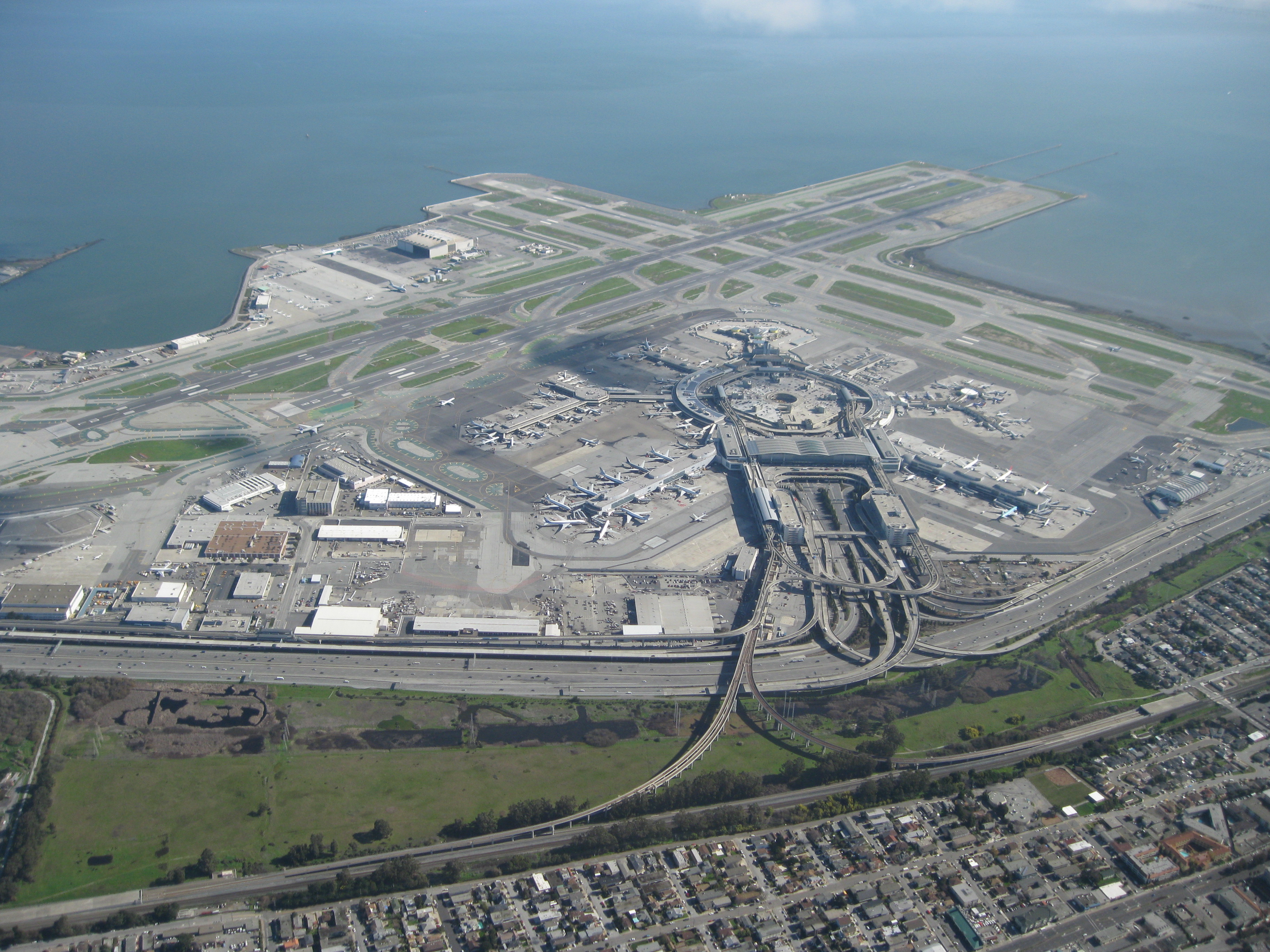
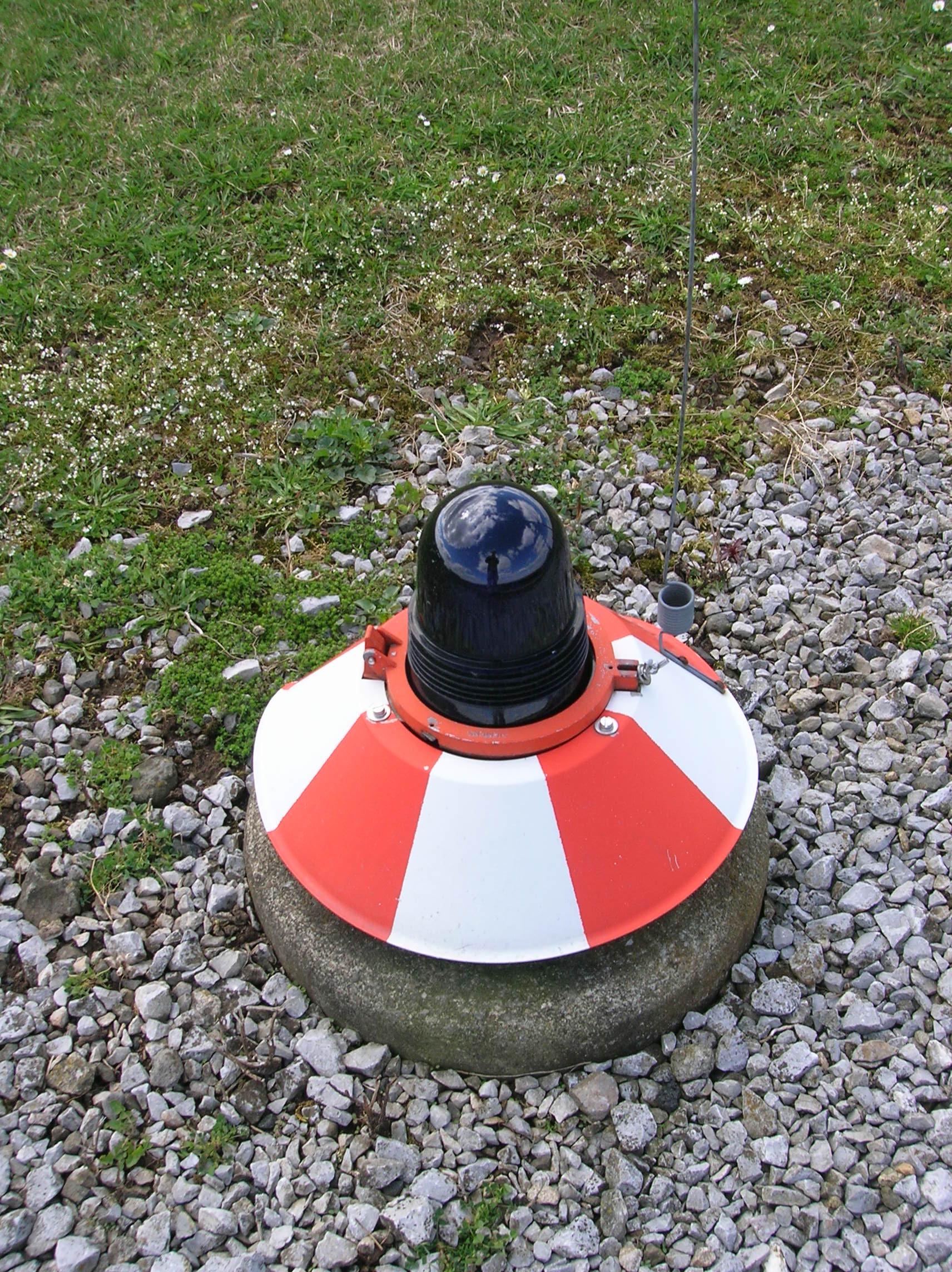
An airport overview, an individual light and a runway: these photographs show different airports and different parts of their lighting systems.
Sources
Sources checked October 22, 2026.